Editor’s Note: This post is part of an ongoing series about religious trauma and profiles Marcy’s journey through—and ultimately out of—a high-demand religious system. Each chapter builds on the next, tracing the seeds of discontent, the grief of “losing religion,” and the courage of rebuilding life on new ground. To follow along and ensure you don’t miss the next installment, subscribe to the blog today.
This article explores the emotional and spiritual turning point of leaving a high-demand religious system. Through Marcy’s lived experience, it illuminates the cost of obedience, the power of inner authority, and the courage required to choose freedom after religious trauma.
Part Three: The Courage to Leave a High-Demand Religious System—Marcy’s Breaking Point and Step Into the Unknown
Choosing Freedom: The Moment Marcy Left Her High-Demand Faith
Marcy remembers that day 31 years ago as if it were yesterday—a true day of reckoning. After decades inside an ultra-conservative, fundamentalist, high-demand religious system, where what she calls “seeds of discontent” had slowly been sown, she finally stepped into the unknown. Her sister, Sue, flew in from Orlando, and together they packed the kids, the cat, and a few belongings into the car. They drove away from that small, familiar Georgia town on an ominous, gray, unforgiving day.
Now 75 years old, Marcy describes the moment as both out-of-body and terrifying—fearful, uncertain, and propelled by something she still can’t fully name. After years of living under an oppressive system of faith, she was certain of one thing: she could no longer stay. Her very life was at stake. Even then, she questioned whether she was making the right choice.
For decades, she had been conditioned to believe she had no voice and no agency—that she needed a man’s permission to make even the smallest decisions about her life. But when permission never came from the religious authorities she trusted, she turned inward. She began to listen to the quiet yet insistent voice within her soul—a voice urging her toward freedom. Leaving became an act of resistance, a courageous reclaiming of her own life and that of her children:
“Off we went on the grayest, gloomiest day it felt like there had ever been in Georgia. I remember it so vividly. I kept thinking, What am I doing? But I knew I had to go.
So we drove. We drove through the gray, through the mist, through the dark clouds. And when we reached Monteagle Mountain and began climbing the hill, the clouds suddenly parted. The sun broke through, and it was like—What?! I can still see it! I looked at Sue, she looked at me, and we both breathed this deep, heavy sigh: We are so okay.
It was such a moment—such a visceral moment of believing. I didn’t know what life was going to look like. I didn’t. Yes, I had some things in place—we had somewhere to stay and the basics covered. But still, a part of me feared that maybe, when I left, God would strike us dead. That something terrible would happen. But… I knew I had to go. You know, when people talk about a still, small voice, I think, That’s it. That’s the thing. When you say, This makes no sense, I’m scared, but something deeper overrides the fear. I can’t even fully name it, but I knew I had to follow it.”

When Faith Becomes a Cage: Grief, Remarriage, and a Diagnosis that Forced Marcy to Confront the Hidden Cost of Her Religious Obedience
That moment of liberation was decades in the making for Marcy. She had been part of an ultra-conservative, fundamentalist, high-demand religious system for many years by this point. Those maturing seeds of discontent were quickening into overwhelming weeds of spiritual suffocation and depression. (For a recap, click here to read Part Two for Marcy’s backstory.)
It wasn’t until the death of her beloved husband, Don, at just 38 years old from lymphoma, that Marcy began to truly feel the weight of her own oppression within the system. Much of her recognition of that growing emptiness, she notes, only came in hindsight. Two years after Don’s death, Marcy remarried—an expectation placed on young widows within her religious hierarchical system. It was much too soon. Not long after this remarriage, something deeper emerged: a despondency that eventually evolved into bone-deep despair.
Marcy’s remarriage was a mistake she readily admits. She describes the man she remarried in gracious terms, yet notes that they were in very different places in life—she, older, a beloved widow in the church and the mother of four children; he, unprepared for the emotional and spiritual responsibilities of being a husband, spiritual leader, and provider. He was also not Don, who had occupied an esteemed role within the church as an elder and beloved community member.
Almost immediately, Marcy recognized the grave error she had made. Part of her acceptance involved acknowledging that she had not yet fully grieved Don—and perhaps nothing drove home this grief more than the stark contrast between her beloved and the new partner to whom she was now bound. Early on, feelings of entrapment surfaced and only deepened with time.
As her new husband struggled in his role, he responded with frustration and anger. Remember, in a church community that heavily followed Bill Gothard’s teachings, his position came with strict expectations. He was the “head of the family” now, and Marcy and her four children were under his authority, his “umbrella of protection.” For better or worse, they occupied prescribed gender roles that kept the wheels of their authoritarian system well oiled.

In hindsight, Marcy acknowledges that it was a heavy burden. But her husband’s embodiment of anger—even rage at times—confused and frightened her. Marcy became depressed and felt she had no one to confide in. She still believed she was to love, honor, and obey her husband. Central to understanding Marcy’s plight is a maladaptive interpretation of theological suffering unique to her high-demand religious system. Marcy explains, “This is the most important thing for me to say: If you believe that you are in a system that is God-ordained, you can struggle through a lot.”
Within a year of their marriage, Marcy was diagnosed with lymphoma—the same type of cancer that had taken Don’s life. She describes herself as “despondent” as she tried to process this new and overwhelming reality. While she was not suicidal, she admits the thought crossed her mind that death might be more agreeable than continuing in such a life-draining marriage:
“I don’t know if I wanted to live,” she shared. “It was at that point that I went through my screaming agony-thing. I mean like, guttural agony, thinking, Oh, I’ll die. I’ll die, and the kids will be….what? They’re going to be orphaned!?”
That thought jolted Marcy, and a surprising strength possessed her—a determination to live, even if only for her children. It energized and propelled her forward.
After multiple medical appointments, Marcy learned that her type of lymphoma was very treatable with Western medicine. But despite what the church told her, what the medical community advised, and what family and friends believed, Marcy—long accustomed to following the direction of others in a system that demanded her obedience—made a bold, unexpected choice: she chose to pursue holistic cancer treatment in Mexico, at a center known for welcoming Americans seeking homeopathic healing.
That choice—one in which Marcy went against the advice of her religious community in service of her own intuition and bodily wisdom—became one of many sparks of empowerment that would be fanned in the coming years. Eventually, that spark would grow into a fire illuminating her path toward freedom.
If She Could Do It: How Permission to Leave Her High-Demand Religious Life Came From an Unlikely Source
Marcy returned from Mexico with strength of mind, body, and soul. She now carried a holistic focus on healing that she hoped would ease the tension and discontent in her marriage. It did not. Her marriage and her husband had not changed. But Marcy had changed. She was no longer the same person who had embarked on her life-saving odyssey to Mexico.
There are things Marcy prefers not to share publicly about the details of her marriage post-cancer. Suffice it to say, Marcy recounts that for the first time she was confronted with her fear that she would not survive her illness if she remained in the marriage. She admits: “What should’ve happened is that I found the courage to acknowledge my despair to my husband and the church. What if, in that moment, I had spoken aloud what I believed to be true: that I am afraid I will die if I stay here?”
But Marcy kept quiet because she feared long-standing ingrained church teaching would prevail. Within their insular, Biblically-based community, leaving seemed impossible. Determinedly then, Marcy began the long, arduous and ultimately unsuccessful journey to prove she had “Biblical grounds” for divorce. Looking back, she says smiling, “It seems foolish now. But I really believed that I would be heard. I was praying to be heard and believed.”
Marcy further explains,
“I had investigated, What are the scriptural outs here?, which are adultery and desertion—according to the scripture that we held to. It depends on who you ask: What does desertion mean? I had heard this from other women, If only he’d had an affair? Wouldn’t that be good? If only he’d really punched me?”
But before Marcy could fully imagine a life outside her ultra-conservative, high-demand religious system, she faced yet another devastating reality: her lymphoma had returned.
As with her first diagnosis, she feared for her own life and for the future of her children without her. But this time, Marcy was stronger, and an emerging imagination—planted during her first healing journey—was taking root within her soul, preparing to carry her through the dark days ahead. This round of lymphoma demanded aggressive, traditional treatment. Determined to live, Marcy chose to undergo the recommended chemotherapy.

Near the end of her treatments, she and her husband went to the Grove Park Inn in Asheville so she could rest. Her body and her spirit were achingly tired, and she recalls the most memorable part of the trip as meeting C. Everett Koop, the then-Surgeon General of the United States.
Still caught between empowerment and desolation, Marcy, by chance, picked up a copy of USA Today as she and her husband were leaving the Inn. Sitting in the passenger seat, still weary from treatment despite her respite, a hat on her bald head for warmth, she glanced down at the paper in her lap and was utterly shocked by what she saw:
“There’s a blurb about Sandi Patty getting a divorce. Sandi Patty! We had seen her a million times in concert—front row. She’s getting a divorce. And the first thing that entered my mind is not sad. No, oh dear, it was, If she could do that… How does she do that? How can you do that? I can remember how I felt—I remember being in the car, I can still see the paper. You know how these things are seared in your memory.”
A permission structure for freedom began to form. Divorce—once unimaginable—suddenly seemed possible.
If Sandi Patty, the most awarded female vocalist in contemporary Christian music and a beloved personality within Marcy’s Bible-based community, could leave her marriage, then maybe Marcy could, too.
Marcy now acknowledges the almost absurd nature of this moment. And yet, only by stepping into her shoes—experiencing the emotional, physical, and spiritual helplessness she lived daily—could anyone fathom how profound that glimmer of freedom truly was. At times like these, hope often appears in unexpected places.
Light Entering Through Darkness: How a Pastor’s Crushing Words and the Elders’ Pressure Awakened Marcy’s Trust in Her Own Voice
Now carrying a fragile but growing sense of possibility, Marcy mustered the courage to meet with one of her church’s two male pastors—the one she perceived as more approachable, more empathetic. Even as she quietly nurtured her own inner authority, she was still embedded in a male-dominated religious system that taught her she needed permission to make decisions about her own life—especially decisions that could disrupt the family structure.
Marcy was confident that once her pastor heard her fears about her husband, he would agree, and she would have the “Biblical permission” she so desperately sought in order to leave.
“I just remember his body language—he was listening—and I thought, I am being heard. I’m there, I’m in treatment, I’m bald, I’ve got my scarf on—I’m in my most vulnerable place. And then he leans over and earnestly says, Marcy, you must accept your husband as God’s gracious gift to you.
What a moment. I was devastated. Absolutely devastated. Because here I’m thinking: I’m being heard, and I had the courage to come and tell it. It took a lot—a whole lot. I’d been thinking about it forever, and finally I do it. I think I was just too stunned to speak because it was so different from what I had imagined he would say. It absolutely was the beginning of the end for me.”
In that moment, her seemingly empathic pastor not only invalidated her pain but implied that a rage-filled man was a blessing from God. Yet his response also ignited the fire she needed to shift from imagination to action. She realized that the external validation she thought she needed would never come from within her church circle.
Instead, she turned toward the quiet voice she had begun to trust during her first cancer journey. Trusting that voice had been like strengthening a long-dormant muscle. “That’s when I think I began to make a plan,” Marcy reflects.
Then, an unexpected gift arrived—much like that USA Today article that had landed in her lap: Marcy learned on her last day of chemotherapy about a cancer survivorship support group run by a nearby Episcopal church. She attended. The group focused on empowerment and healing, studying Getting Well Again by O. Carl Simonton, M.D., which teaches that our thoughts, feelings, and emotions can shape our physical well-being.
As Marcy’s body regained strength, so did her autonomy. She began to contemplate how years of feeling disempowered and suffocated might have contributed to her two cancer diagnoses. She also encountered something new: a male religious leader—the Episcopal priest leading the group—offering empowerment rather than submission at one of the most vulnerable moments of her life. Marcy recalls this as the beginning of hearing life-altering truths in a very different way:
“He talked about that because the book talks about it. Not like, Oh, shame on you for feeling that way. It was, You’ve felt that way, but you know what? We’re going to talk about not feeling that way. This is a new day. You’ve finished your treatment—some of you anyway—but for me it was like, this is a new day.”
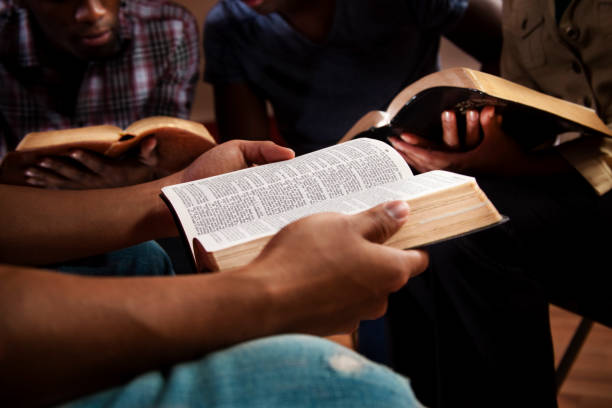
She needed that infusion of empowerment, because once word spread in her church that she was leaving, the elders came one by one—the male authorities of the congregation, with Bibles in hand. Friends pleaded with her not to stray from “the umbrella of protection God had placed over” her. Ironically, they believed she was stripping God’s protection from her own children by leaving a man she feared.
Marcy explains:
“This is crucial to understand—my husband was the authority that God had placed over me. So if I left, that created all kinds of danger: for me, for my children. These were not men with evil intent. These were friends of Don, friends of our family. They genuinely believed they were obeying God’s direction, that they were, Speaking the truth in love.
But by this time, I was hearing my own word from God—a call to courage, to freedom. Permission to leave my marriage, but more importantly, to leave this deadly, oppressive system, a system that had failed us all.”
Their pressure campaign did not work. Instead, Marcy’s conviction only strengthened as she imagined a life of freedom outside the religious system that had held her captive for so long. She was reexamining many aspects of her theology, but one thing did not waver:
“I’m questioning a lot about my faith during this time, but I knew I was not alone. And it wasn’t about being right—it was about knowing what I must do, and knowing I was not doing it alone.”

Question for Reflection:
What helped you rebuild your spiritual life after religious trauma or leaving a high-demand faith? Share your thoughts in the comments below.
Contemplative Journal Prompts for Further Processing:
- List moments in your life that have felt like “the beginning of the end”—and how they eventually led to new beginnings.
- Reflect on the metaphor of Marcy’s gray, overcast departure day that opened into sunlight. What “gray-to-light” moment have you lived?
- Imagine sitting with the future, liberated version of yourself and talking to the part of you who’s still waiting for permission to change. What would you tell them?
A Gentle Invitation to Connect
Marcy’s story reminds us of the inner courage we possess and just how strong we are. If her journey resonates with you, I invite you to join the conversation: share your reflections, comment below, or reach out. Sometimes the first step is simply naming what you’re carrying.
If you’re longing for a safe place to explore your own story and reimagine what spirituality looks like after leaving a high-demand faith system, I welcome you to connect with me personally. You can visit my website and schedule a consultation call—I’d be honored to journey with you as you navigate your path toward freedom, healing, and wholeness.
Coming Next: A New Life
In Part Four of this series, we’ll explore how Marcy began rebuilding her life and spirituality after leaving a high-demand religious system. You’ll discover how a woman once steeped in obedience and submission reclaimed her voice—choosing to attend Vanderbilt Divinity School, becoming an ordained minister, and ultimately serving as a hospital chaplain at one of the most prestigious medical centers in the country. Her story offers a powerful look at spiritual recovery and the transformation that follows religious trauma. Subscribe below so you don’t miss Part Four!